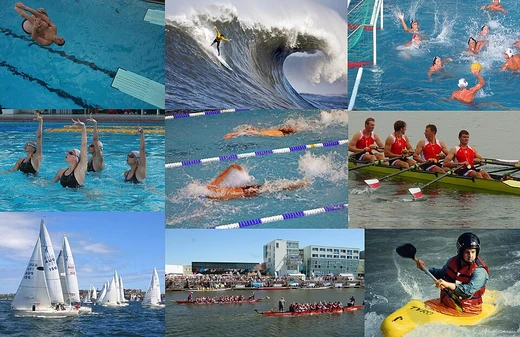
Duke Kahanamoku
Native Hawaiian swimmer, surfer, and Olympic medalist.

Wikipedia / Wikimedia Commons
Duke Paoa Kahinu Mokoe Hulikohola Kahanamoku (August 24, 1890 – January 22, 1968) was a Hawaiian competition swimmer, lifeguard, and popularizer of the sport of surfing. A Native Hawaiian, he was born three years before the overthrow of the Hawaiian Kingdom and lived to see the territory's admission as a state. He was a five-time Olympic medalist in swimming and held the world record in the 100-meter freestyle.
- born
- August 24, 1890, Honolulu, Hawaii
- died
- January 22, 1968, age 77
- field
- Swimming, surfing, lifeguarding, law enforcement, acting
- nationality
- Native Hawaiian, United States citizen
- known_for
- Olympic swimming medals, popularizing surfing worldwide, surfboard rescue of eight men
Lore & Background
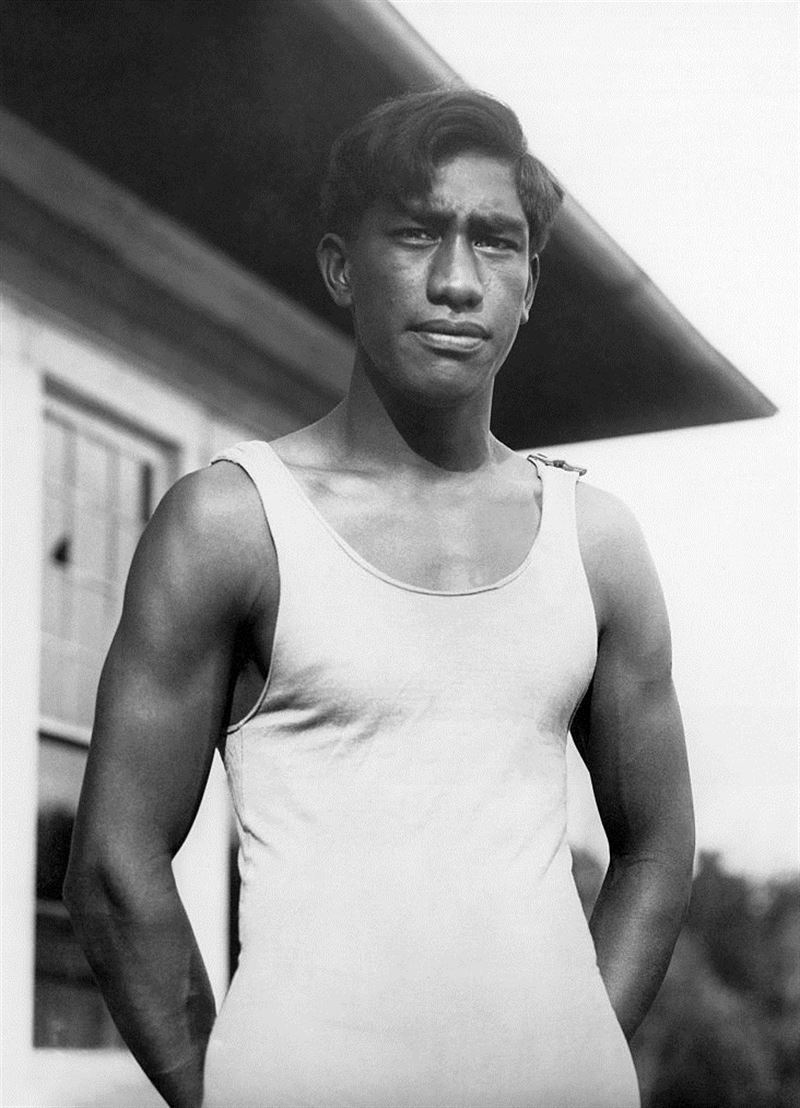
Kahanamoku was born in Honolulu at Haleʻākala, the home of Bernice Pauahi Bishop. He was named after his father, Duke Halapu Kahanamoku, who was christened in honor of Prince Alfred, Duke of Edinburgh. His parents were from prominent Hawaiian ohana considered lower-ranking nobles in service to royalty. In 1893, his family moved to Kālia, Waikiki, where he grew up with his siblings and 31 Paoa cousins. He attended Waikiki Grammar School, Kaahumanu School, and Kamehameha Schools but left to help support the family.
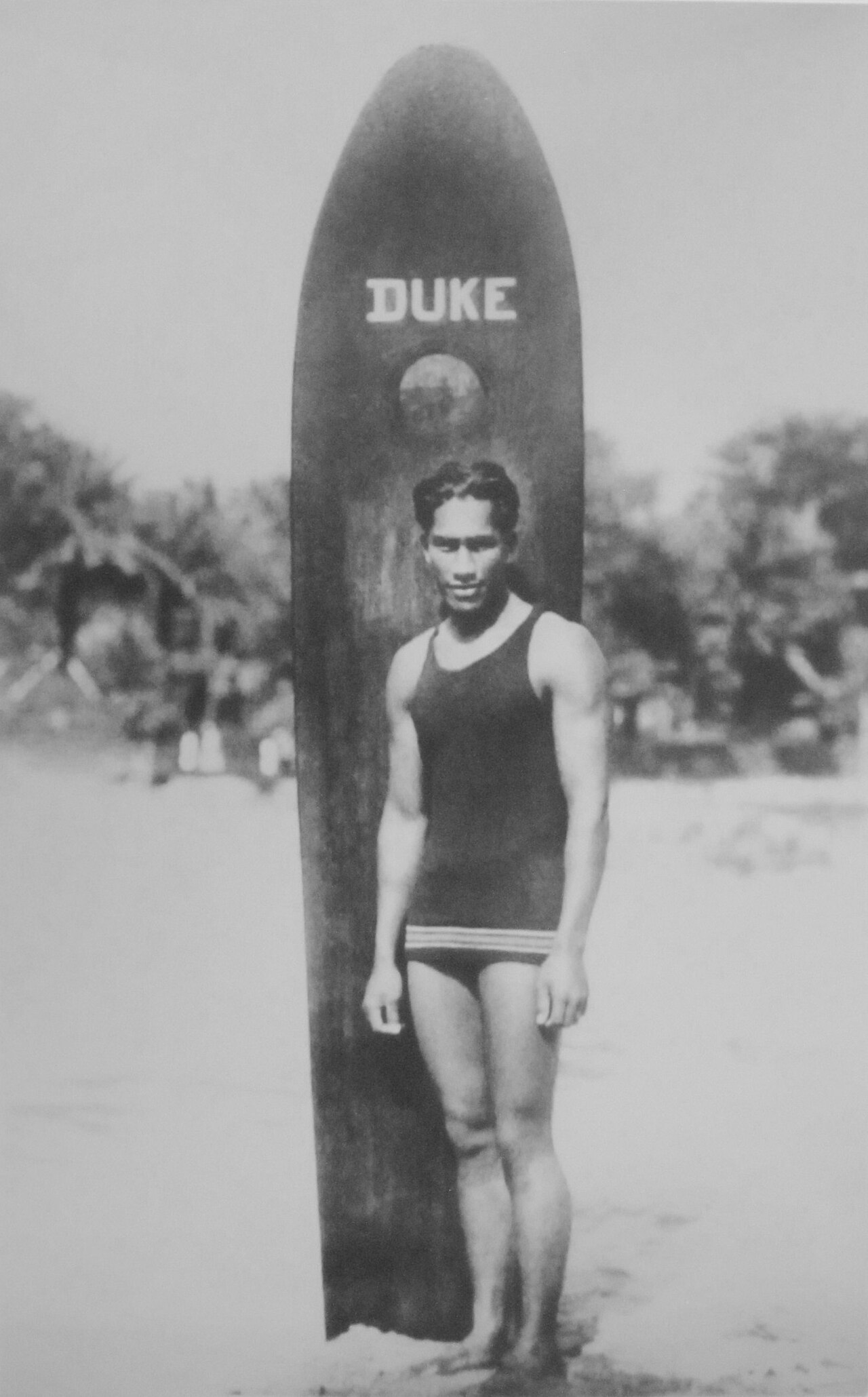
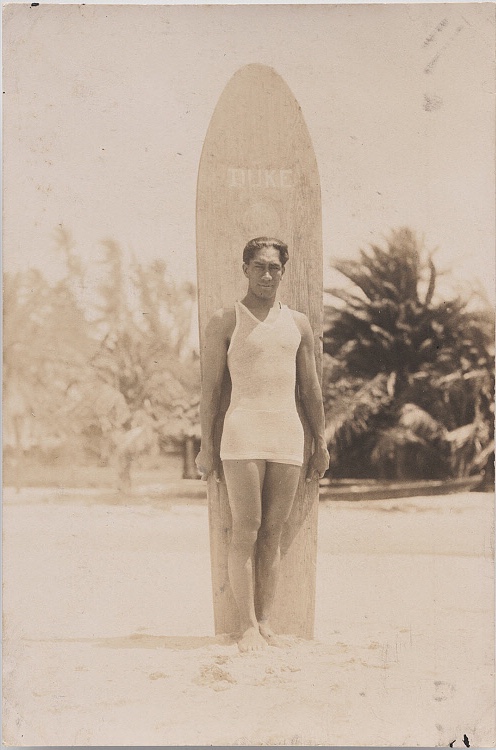
He developed his surfing and swimming skills on Waikiki beaches, preferring a traditional 16-foot koa wood surfboard. On August 11, 1911, he swam 100 yards in 55.4 seconds, beating the world record by 4.6 seconds, though the Amateur Athletic Union initially refused to recognize the feat. He qualified for the U.S. Olympic team in 1912, winning gold in the 100-meter freestyle and silver in the relay. He won gold in both events at the 1920 Olympics and silver in the 100 meters in 1924, with his brother Samuel taking bronze. He later served as an alternate for the U.S. water polo team at the 1932 Olympics.
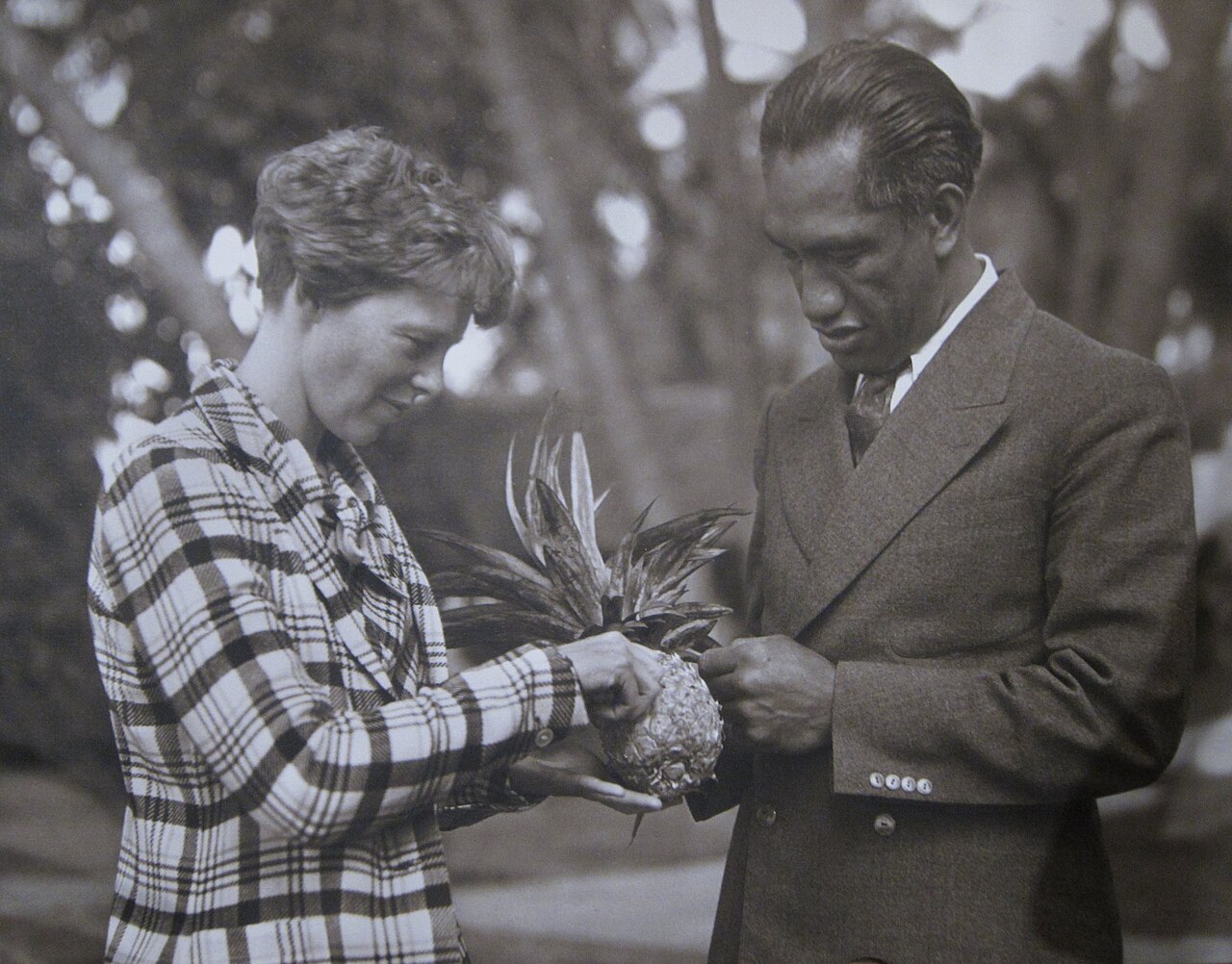
Between competitions, Kahanamoku traveled internationally giving swimming and surfing exhibitions, popularizing surfing in mainland America and Australia. On June 14, 1925, he rescued eight men from a capsized fishing vessel using his surfboard, a feat called 'the most superhuman surfboard rescue act the world has ever seen.' He worked as a law enforcement officer, actor, beach volleyball player, and businessman, and served as Sheriff of Honolulu from 1935 to 1961. He married dance instructor Nadine Alexander in 1940. He was a Scottish Rite Freemason, a Shriner, and a Republican.
Reader's Guide
Duke Kahanamoku's significance lies in his dual role as an elite athlete and a cultural ambassador. As a five-time Olympic medalist and world-record holder, he demonstrated the prowess of Native Hawaiian swimmers on the global stage. More durably, he popularized surfing beyond Hawaii, introducing the sport to Southern California in 1912 and to Australia in 1914, where his exhibition at Freshwater Beach is considered a seminal event. His use of a surfboard in the 1925 Newport Beach rescue influenced lifeguards worldwide to adopt surfboards as standard rescue equipment. His legacy is preserved through the Duke Kahanamoku Invitational Surfing Championships, his induction into the Swimming Hall of Fame and the International Surfing Museum's Walk of Fame, and statues in Hawaii and Australia. The Supreme Court case Duncan v. Kahanamoku, arising from his role as a military police officer during World War II, contributed to constitutional limits on martial law in Hawaii.
Did You Know?
- Kahanamoku's given name 'Duke' was not a title or nickname but a name given in honor of Prince Alfred, Duke of Edinburgh.
- He built a surfboard from a piece of pine from a local hardware store for his 1914 exhibition in Sydney, Australia.
- He rescued eight men from a capsized fishing vessel in Newport Beach, California, on June 14, 1925, using his surfboard.
- He was the pro forma defendant in the landmark Supreme Court case Duncan v. Kahanamoku, which ruled military tribunals for civilians unconstitutional in Hawaii during World War II.
Olympic Career and World Records
Kahanamoku's competitive swimming career spanned three Olympic Games and produced five medals, a record that cemented his place in the sport's history. On August 11, 1911, he clocked 55.4 seconds in the 100-yard freestyle in the salt water of Honolulu Harbor, shattering the existing world mark by a staggering 4.6 seconds. The Amateur Athletic Union, however, refused to acknowledge the feat for years, first suggesting the judges had relied on alarm clocks and later blaming ocean currents. Despite that skepticism, he qualified effortlessly for the 1912 U.S. Olympic team and delivered a gold medal in the 100-meter freestyle in Stockholm, along with a silver in the 4×200-meter relay. Four years later in Antwerp, he captured gold in both the 100-meter and the relay events, edging out fellow Hawaiian Pua Kealoha. At the 1924 Paris Games, now 34 years old, he claimed silver in the 100-meter behind Johnny Weissmuller, while his own brother Samuel took bronze. Though he never medaled again, he remained connected to the Olympic world as an alternate for the 1932 U.S. water polo squad.
Surfing Legacy and Global Impact
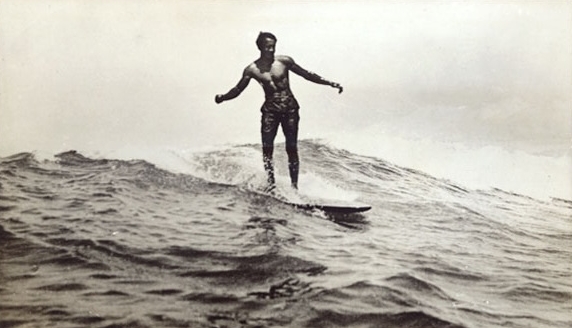
Before Kahanamoku took to the road, surfing existed almost exclusively as a Hawaiian practice. Beginning in 1912, he wove surfing demonstrations into his international swimming tours, first drawing mainland American crowds to the sport in Southern California, where he trained newcomers and lent them boards. His most consequential outing came on Christmas Eve 1914 at Freshwater Beach in Sydney, Australia, where he built a board from a length of pine purchased at a local hardware store and performed a demonstration now widely regarded as the birth of organized surfing in that country. The Freshwater Surf Life Saving Club still preserves that board, and a statue of Kahanamoku stands on the lake's northern headland. Back in California, his reputation as a rescuer was sealed on June 14, 1925, when he paddled his board repeatedly between shore and a capsized fishing vessel in Newport Beach harbor, saving eight men. The police chief called it the most superhuman surfboard rescue ever witnessed, and the publicity prompted lifeguard services nationwide to adopt the board as standard rescue gear. He became the first individual inducted into both the Swimming Hall of Fame and the International Surfing Museum's Walk of Fame.
Family and Cultural Roots
The name 'Duke' was never a title or a casual nickname; it was the given name his father carried, bestowed because Bernice Pauahi Bishop had christened Duke Halapu Kahanamoku in honor of Prince Alfred, Duke of Edinburgh, during a royal visit to Hawaii. Kahanamoku himself was born on August 24, 1890, at Haleʻākala in Honolulu, the residence of Bishop that would later become the Arlington Hotel, just three years before the overthrow of the Hawaiian Kingdom. His mother, Julia Paʻakonia Lonokahikina Paoa, was a devout woman who cherished family lineage, and the two families he came from occupied a place among lower-ranking nobles who served as retainers and trusted advisors to the Kamehameha dynasty. He grew up in Kālia, Waikiki, surrounded by five brothers—all of whom would later compete in aquatic sports—and three sisters, alongside thirty-one Paoa cousins. He attended Waikiki Grammar School, Kaahumanu School, and the Kamehameha Schools, though financial necessity forced him to leave before graduating. He lived long enough to witness Hawaii's admission as a state and to become a United States citizen.
Life Beyond the Pool
Between and beyond his Olympic appearances, Kahanamoku built a remarkably varied life that touched law enforcement, entertainment, and community service. He served as a law enforcement officer and later worked as a businessman, while also joining the Scottish Rite Masonic order in a Honolulu lodge and the Shriners. During stretches in Southern California, he performed as a background and character actor in Hollywood films, connections that inadvertently became a channel for spreading awareness of surfing. He was a regular at the Los Angeles Athletic Club, where he served as a lifeguard and competed on both swimming and water polo teams, and he also played beach volleyball. Even in his personal surfing, his tastes remained rooted in tradition: his favorite board, which he called his 'papa nui,' was a sixteen-foot, 114-pound slab of koa wood modeled after ancient Hawaiian olo boards, complete with no skeg—a feature that had not yet been invented. Though he sometimes used smaller boards later in life, he never abandoned his preference for wood. This breadth of experience—officer, actor, athlete, fraternal brother, entrepreneur—gave him a public presence far wider than any single sport could provide.
Gallery
Frequently Asked Questions
Who is Duke Kahanamoku?
Duke Kahanamoku was a Native Hawaiian swimmer, lifeguard, and surfer born in Honolulu in 1890. He earned five Olympic medals, held the 100-meter freestyle world record, and became a global ambassador for surfing.
What Olympic achievements did Duke Kahanamoku accomplish?
He collected five Olympic medals in competitive swimming during the early 1920s. His peak performance included setting the world record in the 100-meter freestyle, a mark that defined his era in the pool.
How did Duke Kahanamoku introduce surfing to the world?
After his competitive swimming years, he traveled to beaches around the globe and performed surfing demonstrations for crowds who had never seen the sport. Those public displays transformed surfing from a local Hawaiian practice into a recognized international water activity.
What was Duke Kahanamoku's famous surfboard rescue?
He paddled out on his board and pulled eight men to safety from the water, an act that became one of the most cited stories in surf history. The rescue highlighted his skill as both a surfer and a lifeguard and made him a cultural hero well beyond the pool.
Why is Duke Kahanamoku considered a foundational figure in water sports?
Born three years before the overthrow of the Hawaiian Kingdom and living to see Hawaii admitted as a U.S. state, he embodied a full arc of Native Hawaiian history. His dual legacy as an Olympic swimmer and the man who carried surfing onto the world stage makes him a central name in both disciplines.
More in Swimming & Water Sports 1-24
Spotted an error? Know more?
This is a living reference — every entry is fact-audited, and reader corrections feed straight into our audit queue. Suggest an edit · See this site's audit record