Michael Phelps
American swimmer with the most Olympic medals in history.

Wikipedia / Wikimedia Commons
Michael Fred Phelps II, born on June 30, 1985, in Baltimore, Maryland, grew up in the Rodgers Forge section of Towson as the youngest of three children. His mother, Debbie, was a middle school principal, and his father, Michael Sr., a retired Maryland State Trooper and former football player who tried out for the Washington Redskins. His parents divorced when he was nine, a split Phelps later said deeply affected him and his siblings, leaving his relationship with his father distant for years. He attended Rodgers Forge Elementary and Dumbarton Middle School before graduating from Towson High School in 2003. During his school years, he was bullied for his ADHD and protruding ears; after one incident where he retaliated, he was suspended, and that frustration helped push him into swimming.
He started swimming at age seven, partly because his sisters were involved and partly to burn off energy. He later said his mom just wanted him to learn to swim, but he and his sisters fell in love with the sport. Diagnosed with ADHD in sixth grade, by age ten he held a national age-group record in the 100-meter butterfly and began training at the North Baltimore Aquatic Club under coach Bob Bowman. As of August 21, 2018, he still held 11 age-group records—eight in long course and three in short course.
Phelps has trained with Bowman since age 11, describing him as a drill sergeant. After the 2004 Olympics, Bowman became head coach at the University of Michigan, and Phelps joined him there, taking classes for four years without earning a degree and serving as a volunteer assistant coach. When Bowman returned to Baltimore after the 2008 Games, Phelps followed; when Bowman moved to Arizona State University in 2015, Phelps moved to Arizona to keep training under him. A common myth says he ate 12,000 calories daily, but Phelps has called that exaggerated, even during his growth years.
At 15, Phelps qualified for the 2000 Summer Olympics, becoming the youngest male to make a U.S. Olympic swim team in 68 years (since Ralph Flanagan in 1932). He didn’t medal but finished fifth in the 200-meter butterfly. At the 2001 World Championships trials, on March 30, he broke the world record in the 200-meter butterfly at age 15.
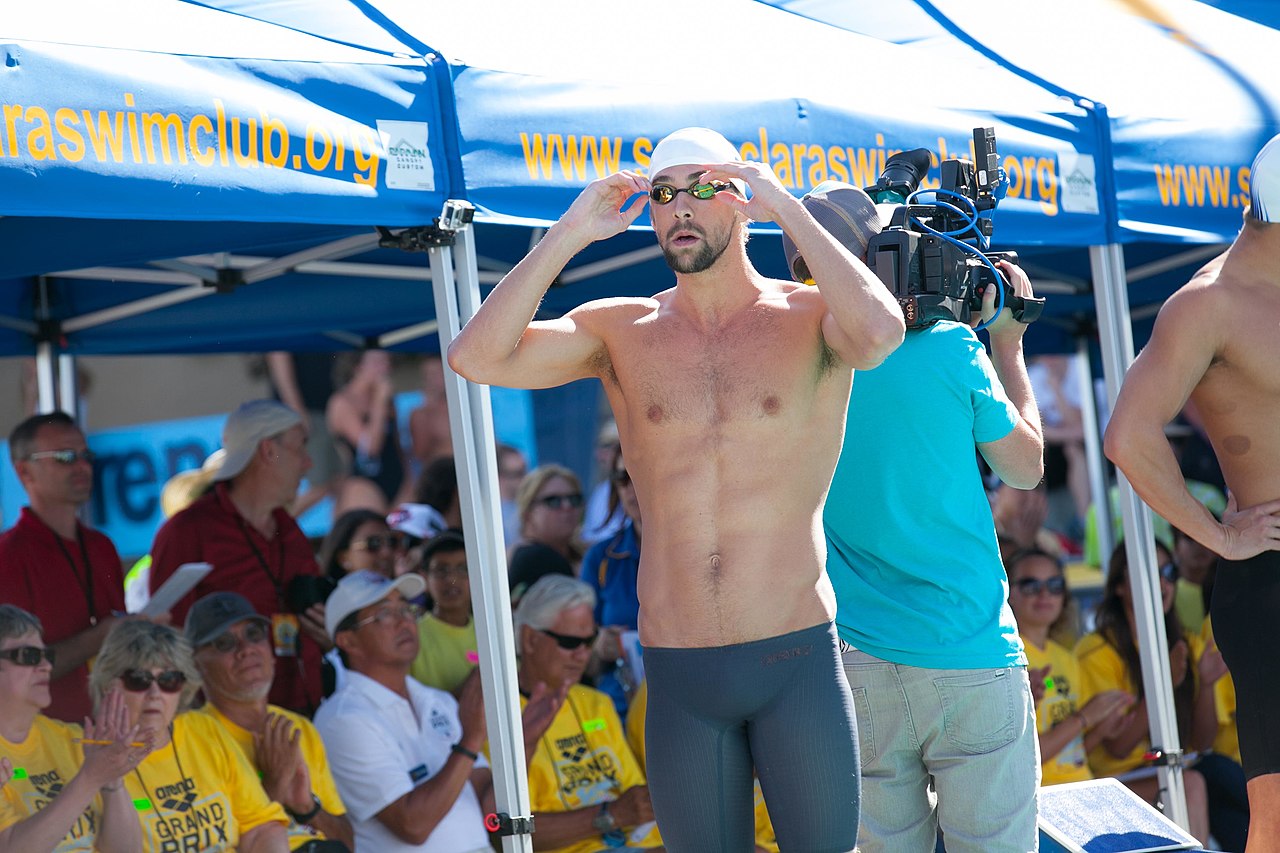
Across four Olympic Games, Phelps won 28 medals—more than any other athlete—including 23 gold, 13 of those in individual events, and 16 individual medals overall
- born
- June 30, 1985
- field
- Competitive swimming
- nationality
- American
- known_for
- Most Olympic medals (28), most Olympic gold medals (23), most gold medals at a single Games (8 in 2008)
Lore & Background
Phelps was born in Baltimore, Maryland, and raised in the Rodgers Forge neighborhood of Towson. He is the youngest of three children. His mother, Deborah Sue Phelps, is a middle school principal; his father, Michael Fred Phelps, was a retired Maryland State Trooper. His parents divorced in 1994 when he was nine, which had a severe negative impact on him. During school, he was bullied due to his ADHD and protruding ears, and the frustration from this experience fueled his drive into swimming. He began swimming at age seven, partly because of his sisters and partly to provide an outlet for his energy. In sixth grade, he was diagnosed with ADHD. By age 10, he held a national age-group record in the 100-meter butterfly and began training at the North Baltimore Aquatic Club under coach Bob Bowman.
Phelps trained under Bob Bowman from age 11. After the 2004 Olympics, Bowman became head coach at the University of Michigan, and Phelps joined him there to train and attend classes over four years, though he did not pursue a degree. He served as a volunteer assistant coach at Michigan. When Bowman returned to Baltimore in 2008, Phelps followed; when Bowman became head coach at Arizona State University in 2015, Phelps moved to Arizona to continue training under him. A popular myth that Phelps ate 12,000 calories daily has been exaggerated, according to Phelps.
Phelps qualified for the 2000 Summer Olympics at age 15, becoming the youngest male to make a U.S. Olympic swim team in 68 years; he finished fifth in the 200-meter butterfly. At the 2001 World Championships, he broke the world record in the 200-meter butterfly, becoming the youngest male ever to set a world record in swimming. At the 2002 Pan Pacific Championships, he won three gold medals and two silvers. At the 2003 World Championships, he won four gold medals, two silver medals, and broke five world records.
Reader's Guide
Michael Phelps's significance lies in his unprecedented Olympic medal haul: 28 medals across four Games, including 23 golds. He tied the record of eight medals at a single Games in 2004 (six gold, two bronze) and broke Mark Spitz's 1972 record by winning eight golds in 2008. He won four gold and two silver in 2012, and five gold and one silver in 2016, making him the most successful athlete of the Games for four consecutive Olympics. He also holds former long course world records in the 200-meter freestyle, 100-meter butterfly, 200-meter butterfly, 200-meter individual medley, and 400-meter individual medley. His international titles and record-breaking performances earned him the World Swimmer of the Year Award eight times, American Swimmer of the Year Award eleven times, and the FINA Swimmer of the Year Award in 2012 and 2016. After the 2008 Olympics, he started the Michael Phelps Foundation, focusing on growing swimming and promoting healthier lifestyles. He retired after 2012, made a comeback in April 2014, and at the 2016 Rio Olympics served as flag bearer for the United States. He announced his second retirement on August 12, 2016, having won more medals than 161 countries. He won the Laureus World Comeback of the Year Award in 2017. His legacy is that of the most decorated Olympian and a transformative figure in swimming.
Did You Know?
- Phelps won 28 Olympic medals across four Games, more than any other athlete.
- At the 2008 Beijing Games, he won eight gold medals, breaking Mark Spitz's 1972 record of seven first-place finishes at a single Olympics.
- He was diagnosed with attention deficit hyperactivity disorder (ADHD) in the sixth grade.
- After the 2008 Olympics, he started the Michael Phelps Foundation to grow the sport of swimming and promote healthier lifestyles.
Career & Achievements
Michael Phelps's competitive résumé reads like a statistical anomaly in the history of sport. Across four Olympic appearances, he collected 28 medals, a total that places him above every other athlete who has ever competed at the Games. Of those, 23 are gold, a figure that also sets the all-time mark for Olympic gold medals in individual events (13) and total individual-event medals (16). Beyond the Olympics, his tally in major long-course international competition—spanning the World Championships and Pan Pacific Championships—reaches 82 medals, with 65 of them gold. He held long-course world records in five different events, from the 100-meter butterfly to the 400-meter individual medley. His dominance was recognized repeatedly: he took the World Swimmer of the Year honor eight times, the American Swimmer of the Year eleven times, and FINA's top individual award in both 2012 and 2016. No other swimmer, and arguably no other athlete in any discipline, has accumulated such a concentrated volume of top-level success over a single career span.
Defining Moments
Four Olympic Games produced four distinct chapters of Phelps's story, each one raising the bar higher than the last. In Athens in 2004, at just 19, he matched the eight-medal single-Games record previously held by gymnast Alexander Dityatin, collecting six gold and two bronze. The 2008 Beijing Games became the defining moment of his career: eight gold medals shattered Mark Spitz's 1972 benchmark of seven first-place finishes at a single Olympics, a mark that had stood for 36 years. London in 2012 brought four gold and two silver, keeping his streak of being the most decorated athlete of the Games alive. Then came Rio in 2016, his fifth and final Olympics, where he added five gold and one silver, making him the most successful athlete of the Games for the fourth consecutive Olympics. He was also chosen by his teammates to carry the American flag during the Parade of Nations, a symbolic capstone to a career that, by the time he announced his final retirement on August 12, 2016, had yielded more medals than 161 individual countries.
Early Life & Formative Years
Michael Fred Phelps II entered the world on June 30, 1985, in Baltimore, Maryland, and grew up in the Rodgers Forge neighborhood of Towson, the youngest of three children. His mother, Debbie, worked as a middle school principal, while his father, a retired Maryland State Trooper with a football background, had a brief tryout with the Washington Redskins in the 1970s. The family's stability was disrupted when his parents divorced in 1994, when Michael was nine; he later described the split as having a severe negative effect on him and his siblings, and his bond with his father grew distant for several years. School proved equally challenging: diagnosed with ADHD in sixth grade, he was also bullied for his condition and his protruding ears, an experience that once led to a suspension after he retaliated. It was partly to channel his energy and partly because his sisters were already in the pool that he first got into the water at age seven. By ten, he had a national age-group record in the 100-meter butterfly and was training at the North Baltimore Aquatic Club under Bob Bowman, a partnership that would define the next two decades of his life.
Legacy & Life Beyond the Pool
Phelps's influence extends well beyond the pool deck. In the wake of his 2008 triumph, he launched the Michael Phelps Foundation, dedicated to growing the sport of swimming and promoting healthier lifestyles. His 2008 performance also earned him Sports Illustrated's Sportsman of the Year, an honor tied to his unprecedented Olympic success that summer. After retiring following London 2012, he made a surprise return in April 2014, a decision that carried him through his Rio 2016 campaign and ultimately to the Laureus World Comeback of the Year award in 2017. When he announced his second and final retirement on August 12, 2016, the story was one of an athlete whose medal count surpassed that of 161 individual nations. He is broadly recognized as the greatest swimmer in the sport's history and frequently cited among the all-time greats in athletics as a whole. His journey—from a bullied, ADHD-diagnosed kid in Towson to the most decorated Olympian in history—continues to inspire swimmers and fans who see in his career a rare blueprint for sustained, record-shattering excellence.
Gallery
Frequently Asked Questions
Who is Michael Phelps?
Michael Fred Phelps II is an American competitive swimmer born on June 30, 1985, in Baltimore, Maryland. He is widely regarded as the most decorated Olympian in history, having amassed 28 total medals across four Games.
How many Olympic gold medals does Michael Phelps hold?
Phelps finished his career with 23 Olympic gold medals, the highest number ever recorded by any athlete in Olympic history. He also holds the combined record of 28 total Olympic medals (gold, silver, and bronze).
What made Michael Phelps's 2008 Beijing performance legendary?
At the 2008 Beijing Games, Phelps captured eight gold medals in a single Olympics, a record that no other athlete has matched. That dominant sweep is still the benchmark people reference when discussing peak individual Olympic performance.
When and why did Michael Phelps retire from competitive swimming?
Phelps officially ended his competitive career after the 2016 Rio de Janeiro Olympics, where he added four more gold medals to his tally. He cited a desire to spend more time with his family and a feeling that he had fulfilled his competitive goals.
Where did Michael Phelps grow up and what was his family background?
He was raised in the Rodgers Forge neighborhood of Towson, Maryland, as the youngest of three children. His mother, Debbie, worked as a middle school principal, and his father, Michael Sr., was a retired Maryland State Trooper and former football player.
More in Swimming & Water Sports 1-24
Spotted an error? Know more?
This is a living reference — every entry is fact-audited, and reader corrections feed straight into our audit queue. Suggest an edit · See this site's audit record