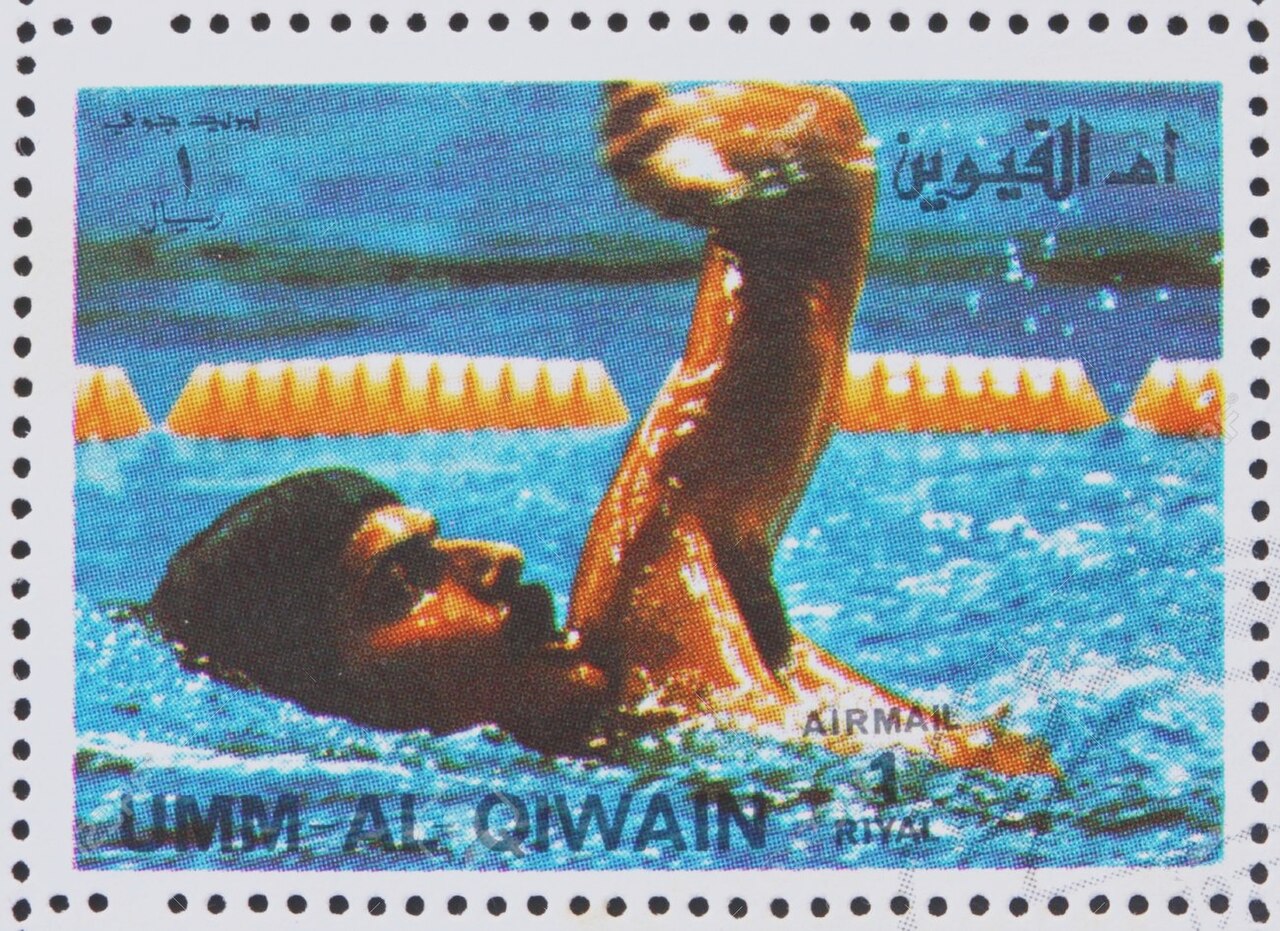
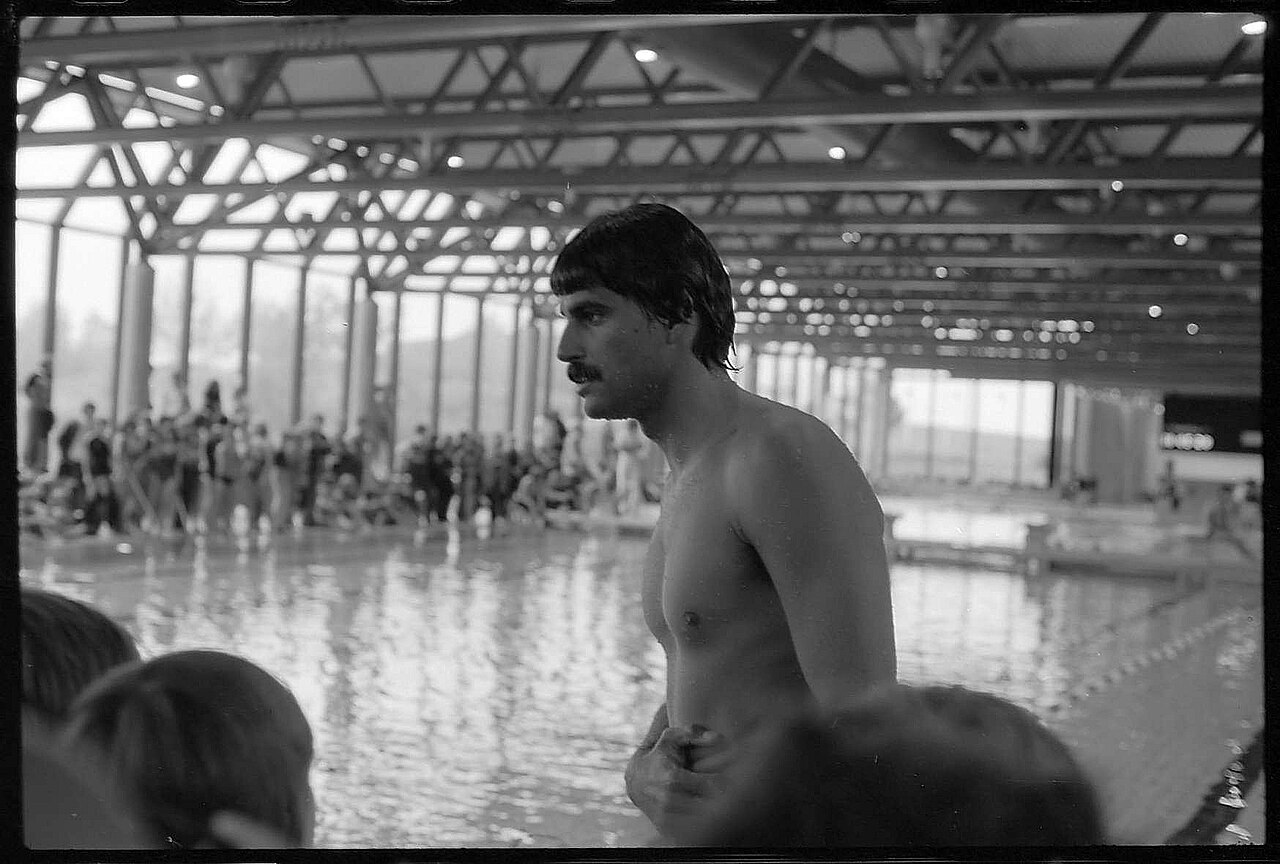
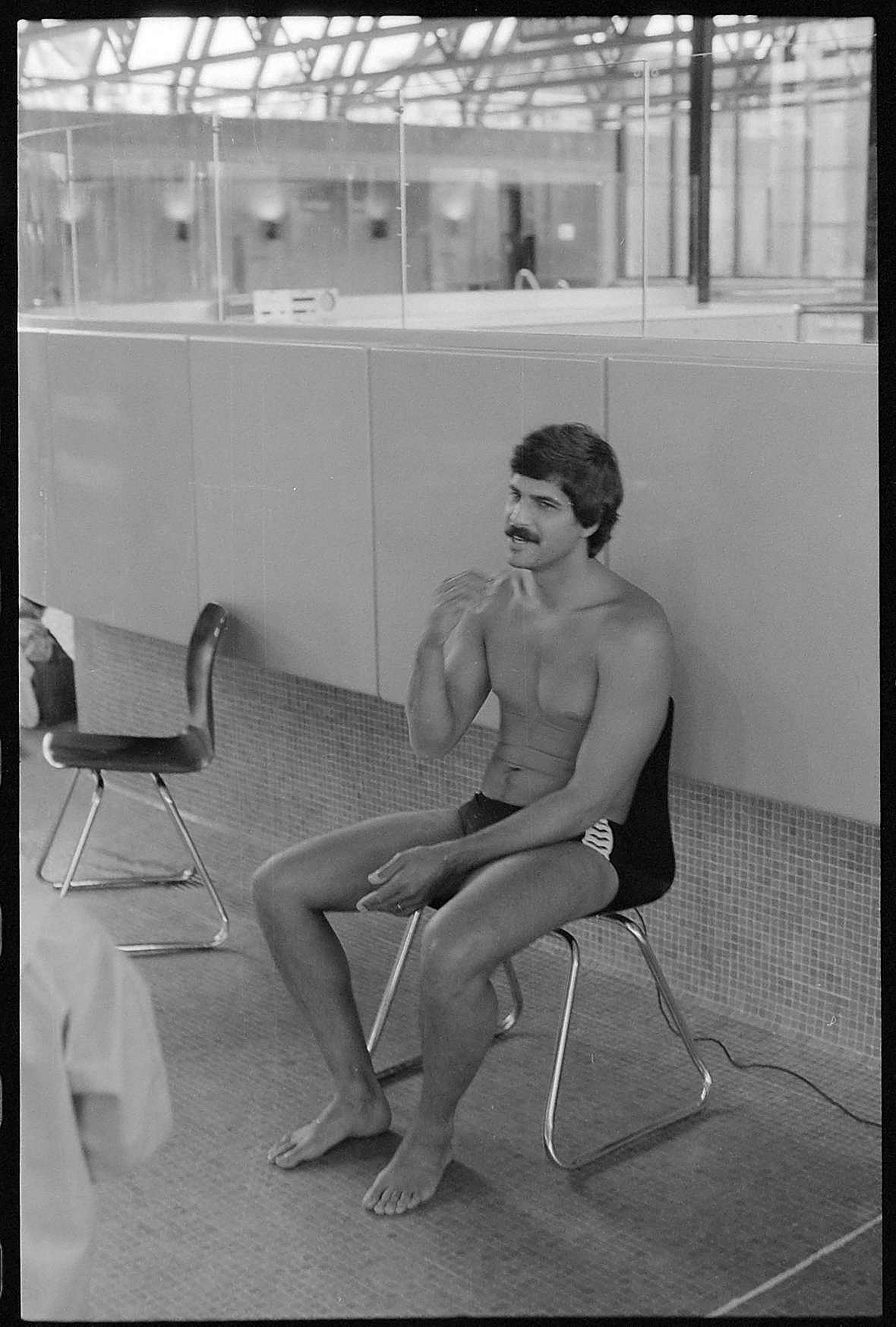
Mark Spitz
Nine-time Olympic gold medalist and seven-time world-record setter in 1972.

Wikipedia / Wikimedia Commons
Mark Andrew Spitz was born on February 10, 1950, in Modesto, California, the oldest of three children in a Jewish family. His mother’s family, originally named Sklotkovick, came from Russia. When Spitz was two, his family moved to Honolulu, Hawaii, where he swam daily at Waikiki Beach. His mother recalled that he would dash into the ocean “like he was trying to commit suicide.” At age six, the family returned to Sacramento, California, and he began competing at a local swim club. By nine, he was training under coach Sherm Chavoor at Arden Hills Swim Club; Chavoor also mentored six other Olympic medalists. At ten, Spitz held one world age-group record and 17 national records. When he was 14, his family moved to Santa Clara, where he joined the Santa Clara Swim Club under coach George F. Haines. From 1964 to 1968, he trained with Haines and attended Santa Clara High School, setting national high school records in every stroke and distance. At 16, in 1966, he won the 100-meter butterfly at the AAU national championships—the first of his 24 AAU titles. The next year, he set his first world record (4:10.60 in the 400-meter freestyle) at a small California meet.
Spitz’s first international competition was the 1965 Maccabiah Games in Israel. At 15 and 130 pounds, he won four gold medals (400 m freestyle, 1500 m freestyle, 400 m individual medley, and 800 m freestyle relay) and was named the Games’ most outstanding athlete. He returned to Israel for the 1969 Maccabiah Games, winning six gold medals and again being named outstanding athlete. In 1985, he lit the torch to open those Games. In 2005, he was part of the U.S. delegation at the Maccabiah Games and spoke at the opening ceremonies in Richmond, Virginia.
At the 1967 Pan American Games, Spitz won five gold medals—a record that stood until Brazilian swimmer Thiago Pereira won six golds at the 2007 Pan American Games.
By the 1968 Summer Olympics in Mexico City, Spitz held ten world records and boldly predicted he would win six gold medals. He ended up with two team golds: the 4×100-meter freestyle relay (3:31.70) and the 4×200-meter freestyle relay (7:52.33). He finished second to fellow American Doug Russell in the 100-meter butterfly, losing by half a second despite holding the world record and having beaten Russell all ten times they raced that year. (Russell had briefly matched Spitz’s world record in Augu
- born
- February 10, 1950, Modesto, California
- field
- Competitive swimming
- nationality
- American
- known_for
- Seven gold medals at 1972 Olympics, all in world-record time; nine career Olympic golds
Lore & Background
Spitz began swimming at age two in Honolulu, Hawaii, and by age nine was training at Arden Hills Swim Club under coach Sherm Chavoor. At 14, his family moved to Santa Clara, where he trained with George F. Haines and set national high school records in every stroke and distance. He won his first AAU title at 16 and set his first world record in the 400-meter freestyle at a small California meet in 1967.
At the 1968 Olympics in Mexico City, Spitz predicted six golds but won only two team relays. He finished second in the 100-meter butterfly to Doug Russell, despite holding the world record. Disappointed, he chose to train at Indiana University under coach Doc Counsilman, winning eight NCAA titles and the James E. Sullivan Award in 1971.
At the 1972 Munich Olympics, Spitz won seven gold medals, each in world-record time, including the 100-meter freestyle (51.22), 200-meter freestyle (1:52.78), and 100-meter butterfly (54.27). After the Munich Massacre, he left early due to security concerns as a Jewish athlete. He retired at age 22 and attempted a comeback at 41 for the 1992 Olympics but failed to qualify.
Reader's Guide
Mark Spitz's seven gold medals at a single Olympics set a benchmark that defined swimming excellence for 36 years. His achievement at the 1972 Munich Games—each gold accompanied by a world record—demonstrated a level of dominance rarely seen in any sport. Spitz's nine career Olympic golds place him among the most decorated Olympians, alongside figures like Larisa Latynina and Carl Lewis, and only surpassed by Michael Phelps and Johannes Høsflot Klæbo. Beyond his Olympic feats, Spitz set 35 world records between 1968 and 1972, won 31 AAU titles, and was named World Swimmer of the Year three times. His early career included five golds at the 1967 Pan American Games and four golds at the 1965 Maccabiah Games. Spitz's legacy extends into popular culture: a poster of him in swimsuit and gold medals led ESPN to call him 'the hottest pin-up since Betty Grable.' He later worked as a sports commentator for ABC Sports and made television appearances. His record of seven golds in one Olympics remained unbroken until Michael Phelps won eight in 2008, cementing Spitz's place as a foundational figure in competitive swimming.
Did You Know?
- Spitz won four gold medals at the 1965 Maccabiah Games at age 15 and was named most outstanding athlete.
- He set 35 world records during his career, two of which were in trials and unofficial.
- Spitz was the third athlete to win nine Olympic gold medals.
- After the 1972 Munich Massacre, he was escorted to London by U.S. Marines for his safety.
A Career Defined by Dominance
Mark Spitz's competitive résumé between 1968 and 1972 reads like a statistical anomaly. Across those four years he collected nine Olympic gold medals alongside a silver and a bronze, five Pan American Games golds, 31 AAU national championships, and eight NCAA titles. His 35 world records—two of them set in unofficial trial settings—demonstrated a consistency that few athletes in any sport have matched. Swimming World Magazine recognized this sustained excellence by naming him World Swimmer of the Year in 1969, 1971, and 1972. His Pan American Games haul of five golds stood as a record for four decades, finally broken by Brazil's Thiago Pereira in 2007. Spitz also became only the third athlete in history to accumulate nine Olympic gold medals, joining an elite group that would later include Larisa Latynina, Paavo Nurmi, Carl Lewis, Katie Ledecky, and Caeleb Dressel. No other swimmer of his era came close to matching the sheer volume of titles, records, and international honors he gathered in such a compressed window.
Seven Golds in Munich
At the 1972 Munich Olympics, Spitz set out to repeat his goal of six gold medals and instead delivered seven, each in world-record time. His victories spanned the 100-meter freestyle (51.22), 200-meter freestyle (1:52.78), 100-meter butterfly (54.27), 200-meter butterfly (2:00.70), the 4×100-meter freestyle relay (3:26.42), the 4×200-meter freestyle relay (7:35.78), and the 4×100-meter medley relay (3:48.16). The most dramatic was the 100-meter freestyle, an event he had been reluctant to enter. Minutes before the race, he told ABC broadcaster Donna de Varona on the pool deck that if he swam seven events and won only six, he would be a failure. He won by half a stroke. The 1968 Mexico City Games had been a humbling contrast: despite holding ten world records and publicly predicting six golds, he had managed only two team relay golds and a silver in the 100-meter butterfly, losing to Doug Russell by half a second despite having beaten him in their previous ten matchups that year. Munich was his redemption and his masterpiece.
From Waikiki to Santa Clara
Born in Modesto, California, in 1950, Spitz grew up in a Jewish family whose maternal lineage traced back to Russia. At age two, the family relocated to Honolulu, where the young boy would dash into the Waikiki surf daily—his mother later described the sight as a child "trying to commit suicide." By six, the family had returned to Sacramento, and Spitz began competing at a local swim club. At nine, he joined the Arden Hills Swim Club under coach Sherm Chavoor, who would go on to mentor six other Olympic medalists. His progress was extraordinary: by ten, he held one world age-group record and 17 national records. At 14, a move to Santa Clara placed him under coach George F. Haines, and during his four years at Santa Clara High School he held national high school records in every stroke and every distance. In 1966, at 16, he captured his first AAU national title in the 100-meter butterfly. The following year he set his first world record—4:10.60 in the 400-meter freestyle—at a modest California meet, announcing himself to the global swimming stage.
A Legacy That Outlasted a Generation
Spitz's seven-gold, seven-world-record performance in Munich established a single-Olympic benchmark that endured for 36 years. It was not until Michael Phelps claimed eight golds in Beijing in 2008 that the mark was finally surpassed—and Phelps, much like Spitz, also set seven world records during his Games. Beyond the Olympics, Spitz's connection to the Maccabiah Games reflected his Jewish heritage and a lifelong bond with the event. He first competed in 1965 at age 15, winning four golds and the outstanding athlete award in Tel Aviv. He returned in 1969 for six more golds and another outstanding athlete honor. In 1985 he lit the opening torch, and in 2005 he joined the U.S. delegation, speaking at the JCC Maccabiah Games Opening Ceremonies in Richmond, Virginia. His 1971 James E. Sullivan Award as America's top amateur athlete and his "Mark the Shark" nickname from Indiana teammates further cemented a legacy that extended well beyond the pool, touching sports culture, Jewish identity, and the very definition of what one athlete could accomplish in a single Olympic cycle.
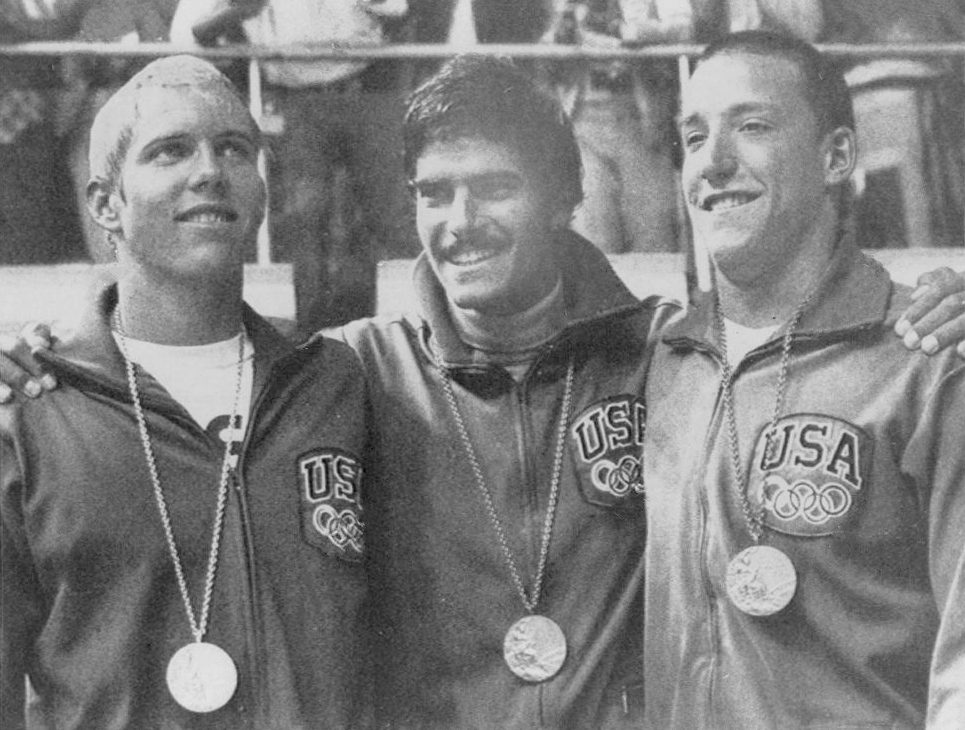
Gallery


Frequently Asked Questions
Who is Mark Spitz?
Mark Andrew Spitz is an American former competitive swimmer born on February 10, 1950, in Modesto, California. He is widely regarded as one of the greatest swimmers in Olympic history, having collected nine gold medals over his career.
What is Mark Spitz most famous for?
Spitz is best known for winning seven gold medals at the 1972 Munich Olympics, each one set in a world-record time. That single-competition feat turned him into a global sports icon virtually overnight.
How many Olympic gold medals did Mark Spitz win in total?
He earned nine Olympic gold medals across his competitive career. His legendary seven-gold haul in 1972 was built on top of two additional golds won at the 1968 Mexico City Games.
How did Mark Spitz first get into swimming?
His family relocated to Honolulu when he was two, and he spent his early childhood swimming daily at Waikiki Beach. After moving back to California at age six, he joined a local swim club and was training under coach Sherm Chavoor by the time he was nine.
Why is Mark Spitz considered so important to swimming history?
His seven-gold, seven-world-record performance in 1972 redefined what was possible in a single Olympic cycle and drew enormous audiences to the sport. He remains a benchmark that later swimmers still measure themselves against.
More in Swimming & Water Sports 1-24
Spotted an error? Know more?
This is a living reference — every entry is fact-audited, and reader corrections feed straight into our audit queue. Suggest an edit · See this site's audit record